
Data Governance Policy at a Glance
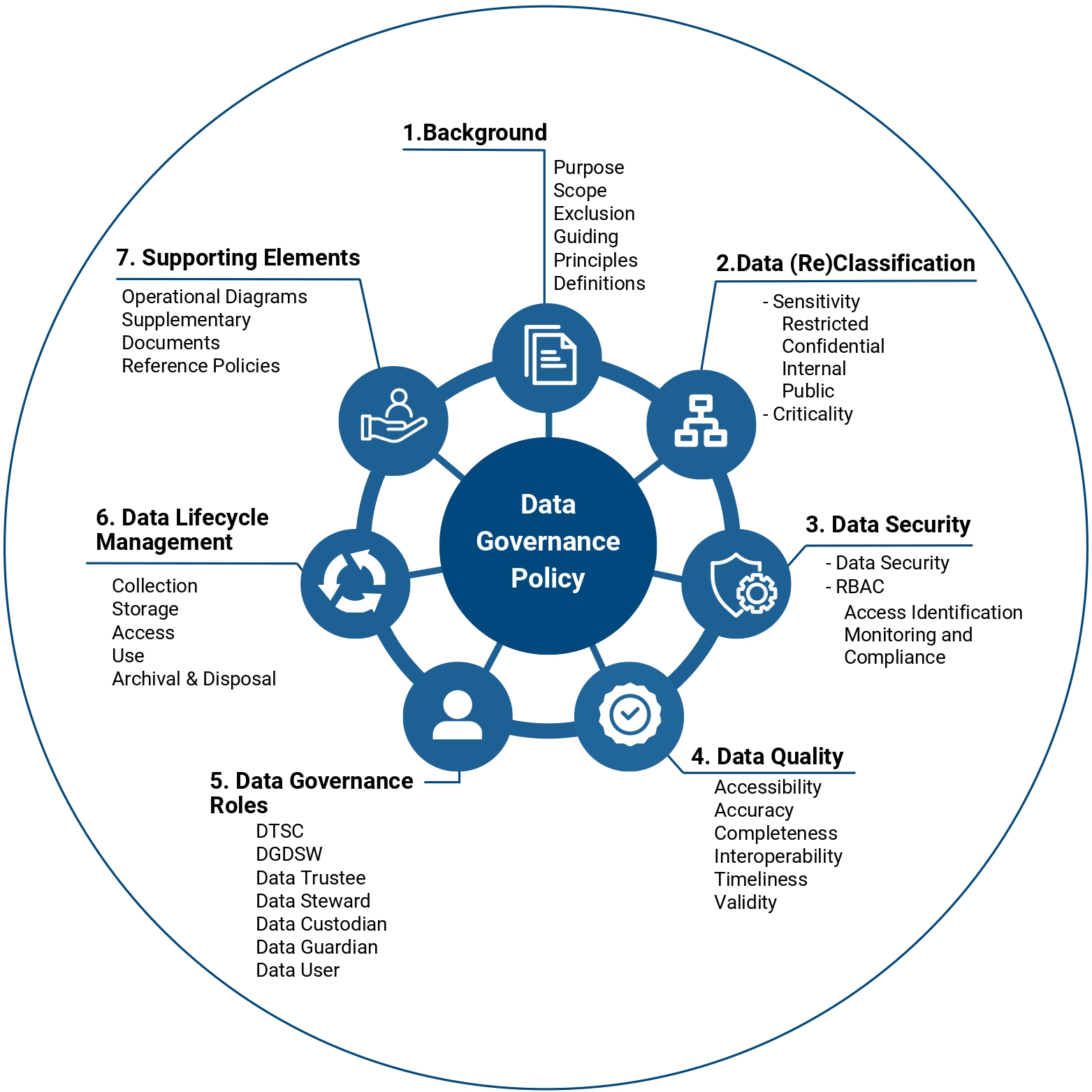
Why Do We Need a Data Governance Policy?
Data Management & Compliance
Establish core principles and best practices for effective management and use of institutional data.
Ensure compliance with relevant regulations and standards.
Security & Accessibility
Guarantee that institutional data is secure, reliable, and accessible within a clear system of controls.
Support informed decision-making, planning, and reporting through well-managed data.
Roles & Responsibilities
Articulate the roles and responsibilities for the stewardship of institutional data and information systems.
Data Governance Policy Scope
What is Institutional Data?
This Policy applies to all data used in the administration of the University and its constituent units, relevant to the operations, management, or strategic planning of the University.This Policy applies to all data used in the administration of the University and its constituent units, relevant to the operations, management, or strategic planning of the University.
This includes, but is not limited to, data from systems related to finance, human resources, student management, research management, research performance, course management, and learning management.
This includes but is not limited to print, electronic, audiovisual, or in archived or backup states.
Exclusions
This Policy does not apply to clinical data or to research data generated through individual research projects (e.g., research observations, findings, and experimental outcomes).
These categories of data are subject to separate governance arrangements in accordance with applicable ethical, legal, and data management protocols.
Data Governance Guiding Principles
- Institutional data is the property of the University and should be managed as a key strategic asset throughout its entire lifecycle.
- Data Governance roles are clearly defined, and individuals assigned to these roles are aware of their responsibilities.
- Institutional data will be easily accessible to relevant members of the University as needed to carry out their duties.
- Data quality standards for institutional data are defined and monitored.
- All members of the University play an important role in ensuring compliance with data governance procedures and standards.
- Resolution of issues related to the quality and accessibility of institutional data follows consistent processes.
- Data definitions are based on common and shared terminology.
- Efforts are made to minimise the unnecessary duplication of institutional data, recognising that certain situations may require duplication to meet diverse needs while striving for a unified system of record.
- Governance and management of institutional data must comply with legal requirements, privacy, and security principles, both internally and externally.
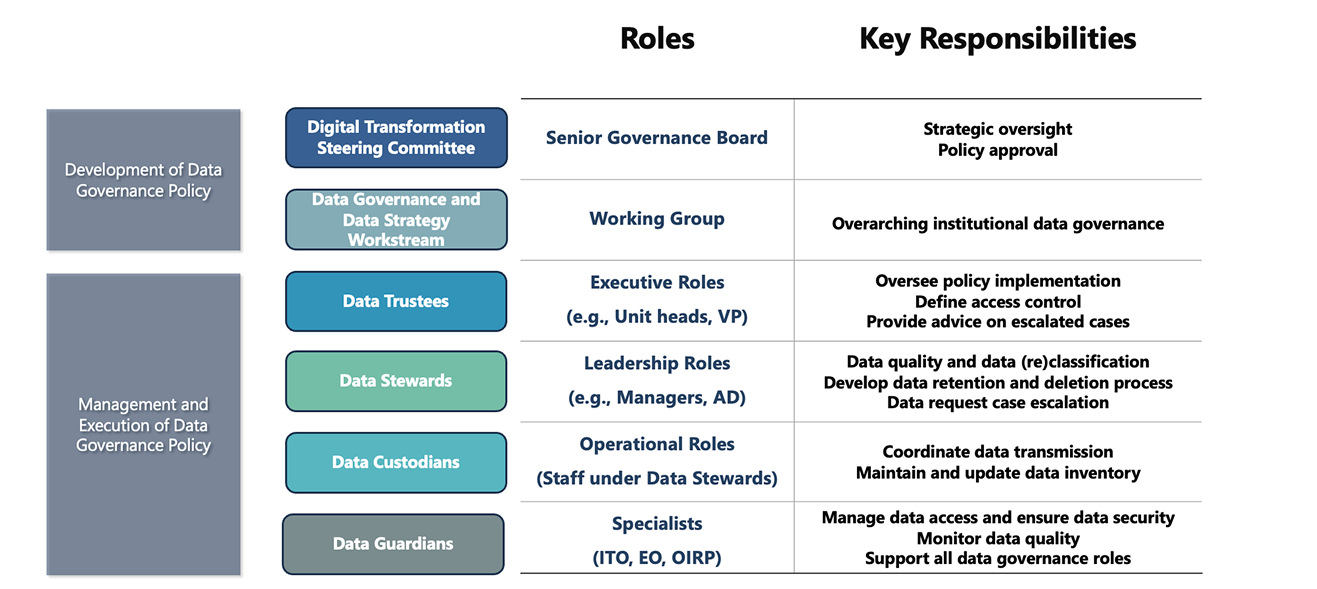
Data Governance Organisational Structure
A clear organisational structure ensures data governance responsibilities are well-defined, with personnel at all levels working collaboratively to achieve effective data management.
Learn More About Data Governance Policy
Explore detailed classification standards, management processes, and related responsibilities for various data types